



Outdoor Fireplace vs Fire Pit in Australia: Which Is Better for Autumn Entertaining?
As summer softens into autumn, Australians don’t retreat indoors, we adapt.
The light lingers a little less. The evenings carry a slight chill. AFL season begins. Long lunches stretch comfortably into dinner.
Outdoor living doesn’t stop. It evolves.
And for many homeowners, that shift raises a familiar question:
Is a fire pit enough or is it time for a proper outdoor fireplace?
If you’re designing or upgrading your outdoor space, the decision isn’t simply about warmth. It’s about how you entertain, how you use your backyard, and how permanent you want that space to feel.
Here’s how the two compare in real Australian conditions.
The Way Australians Actually Entertain
Backyard entertaining in Australia is rarely minimal.
It’s food on the grill.
It’s friends staying longer than planned.
It’s children playing while adults linger over another course.
It’s autumn evenings that deserve to be enjoyed properly.
A heating solution in this environment isn’t just a comfort feature, it becomes part of the architecture of the space.
And this is where the difference between a fire pit and a structured outdoor fireplace becomes clear.
Fire Pit: Casual and Atmospheric
A fire pit offers simplicity.
It delivers:
- 360-degree warmth
- A relaxed, open setting
- Flexibility in placement
-
A lower initial investment
For compact patios or occasional gatherings, it works well. It creates ambience quickly and requires little commitment.
However, in many Australian backyards — particularly open or coastal environments — wind can diminish both warmth and comfort. Heat disperses outward, and smoke direction can shift unpredictably.
While some models allow basic cooking, fire pits are rarely designed as true culinary features.
They provide an atmosphere.
They are less often the centrepiece.

Outdoor Fireplace: Structure, Warmth and Intention
An outdoor fireplace introduces definition.
Unlike a fire pit, it:
- Directs warmth forward into the seating zone
- Channels smoke upward through a chimney
- Shields the flame from wind
- Establishes a clear focal point
The result is not simply more heat, but more usable warmth.
In open Australian settings, forward-directed heat makes a measurable difference. Rather than dissipating into surrounding air, it remains where people gather.
And when thoughtfully designed, the fireplace becomes part of the landscape not an accessory placed within it.
The Buschbeck Difference: European Engineering Meets Australian Living
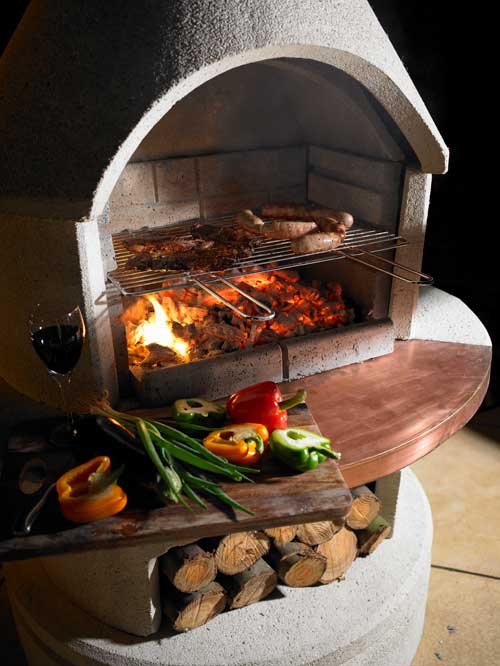
Buschbeck fireplaces are designed as permanent outdoor structures combining European engineering with the practical realities of Australian entertaining.
They integrate:
- Wood-fired heating
-
Dedicated BBQ grilling capability
-
Roasting functionality
-
The potential for wood-fired pizza cooking
This multifunction approach reflects how Australians actually use their outdoor spaces.
It’s rarely just about sitting by a flame. It’s about cooking, serving, sharing and lingering.
Rather than choosing between a grill, a pizza oven and a heating source, a Buschbeck fireplace consolidates all three into a single architectural element.
The effect is cohesive. Intentional. Considered.

Fire Pit vs Buschbeck Outdoor Fireplace: A Practical Comparison
|
Feature |
Fire Pit |
Buschbeck Outdoor Fireplace |
|
Heat Direction |
Radiates outward in all directions |
Directed forward into seating area |
|
Wind Performance |
Flame affected by breeze |
Chimney stabilises heat and smoke |
|
Cooking Capability |
Limited |
Integrated BBQ and wood-fired options |
|
Design Presence |
Portable, low-profile |
Permanent architectural feature |
|
Best Suited For |
Casual, short gatherings |
Structured, extended entertaining |
A fire pit suits relaxed, occasional use.
A Buschbeck fireplace is designed for regular, food-focused entertaining in real Australian conditions.

Designed for Longevity
There is also a design consideration.
Fire pits tend to feel temporary — flexible, movable, informal.
A structured outdoor fireplace feels permanent. It anchors an alfresco zone. It adds visual weight. It suggests intention.
For homeowners investing in landscaping or outdoor renovation, that permanence matters.
It becomes part of the home — not an accessory within it.
Which Is Right for Your Space?
The answer depends on how you entertain.
If your gatherings are occasional and informal, a fire pit may be sufficient.
If your outdoor space regularly hosts long lunches, extended family dinners or AFL evenings that carry on after sunset, a multifunction outdoor fireplace offers greater comfort, capability and presence.
In Australian autumn conditions — where evenings cool but the desire to stay outdoors remains — that difference becomes especially noticeable.
Frequently Asked Questions
Is an outdoor fireplace warmer than a fire pit?
Because heat is directed forward into the seating area, a structured outdoor fireplace typically feels warmer and more efficient — particularly in breezy conditions.
Can you cook on a Buschbeck fireplace?
Yes. Buschbeck fireplaces are engineered for BBQ grilling and wood-fired cooking, making them highly versatile for outdoor entertaining.
Are outdoor fireplaces suitable for windy areas?
Generally, yes. The chimney system improves flame stability and smoke direction compared to open fire pits.
Do outdoor fireplaces suit modern Australian homes?
Well-designed outdoor fireplaces integrate seamlessly into contemporary alfresco areas, offering both function and architectural presence.
A Considered Choice for Australian Autumn
If you’re seeking simple ambience and flexibility, a fire pit offers an easy solution.
But if you want:
- Directed, efficient warmth
- Integrated cooking capability
- Wind resilience
- A permanent architectural feature
-
A space designed for long evenings outdoors
A Buschbeck Outdoor Fireplace is built for that purpose.
Because in Australia, autumn isn’t an ending.
It’s simply a different kind of evening one that deserves to be designed properly.